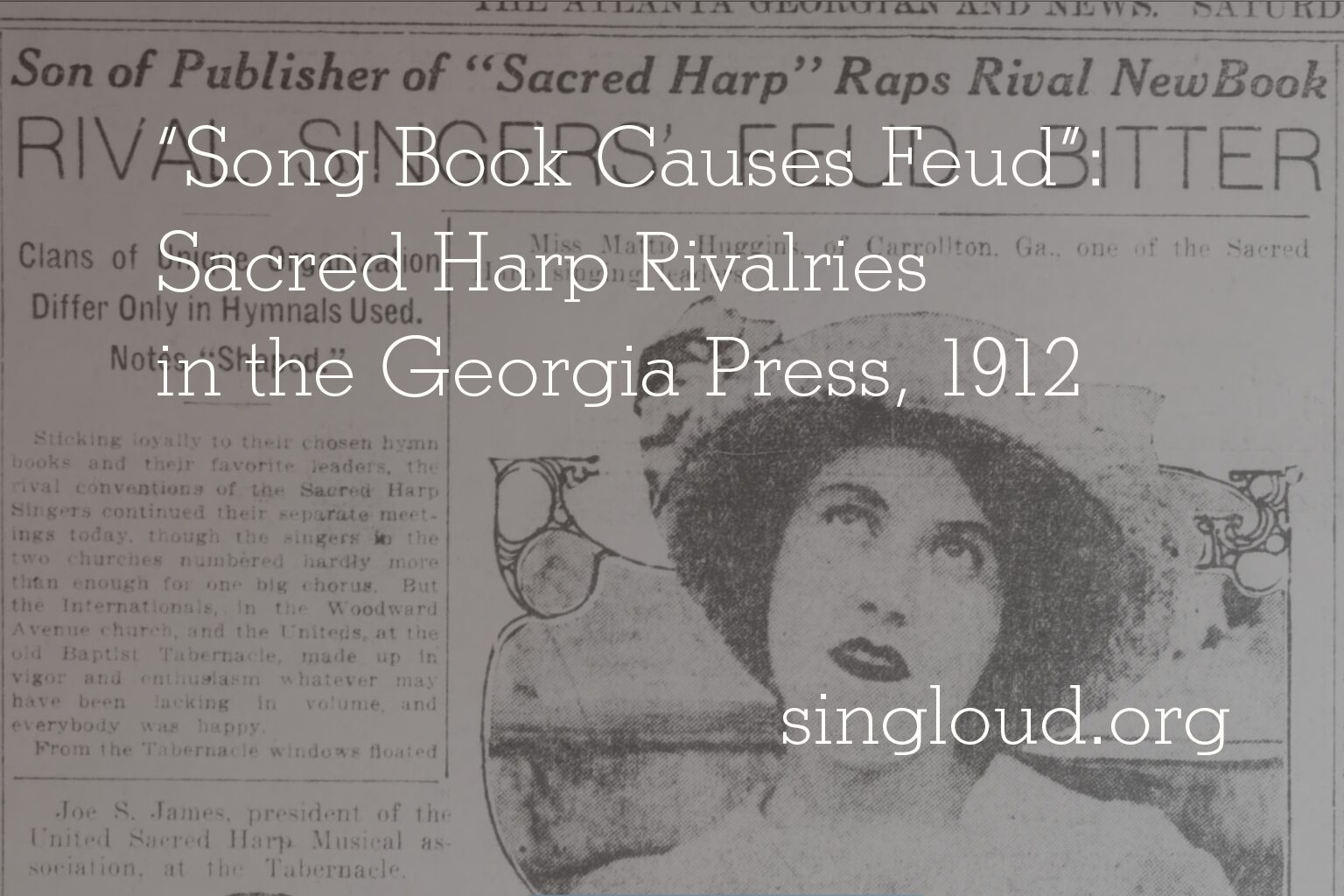
In early September 1912, Georgia newspapers closely followed a public split within the Sacred Harp singing community, as rival conventions met simultaneously in Atlanta. At issue was not singing style or theology, but the legitimacy of competing songbooks—both rooted in B. F. White’s 1844 Sacred Harp.
The following newspaper accounts, published over three consecutive days, offer a rare contemporary window into how this dispute was understood by outsiders: as a clash over orthodoxy, inheritance, authority, and ownership, described in language more often reserved for political or religious schisms. Read together, these articles document a pivotal moment when questions of tradition, revision, and control came sharply into focus within Sacred Harp history.
The three articles:
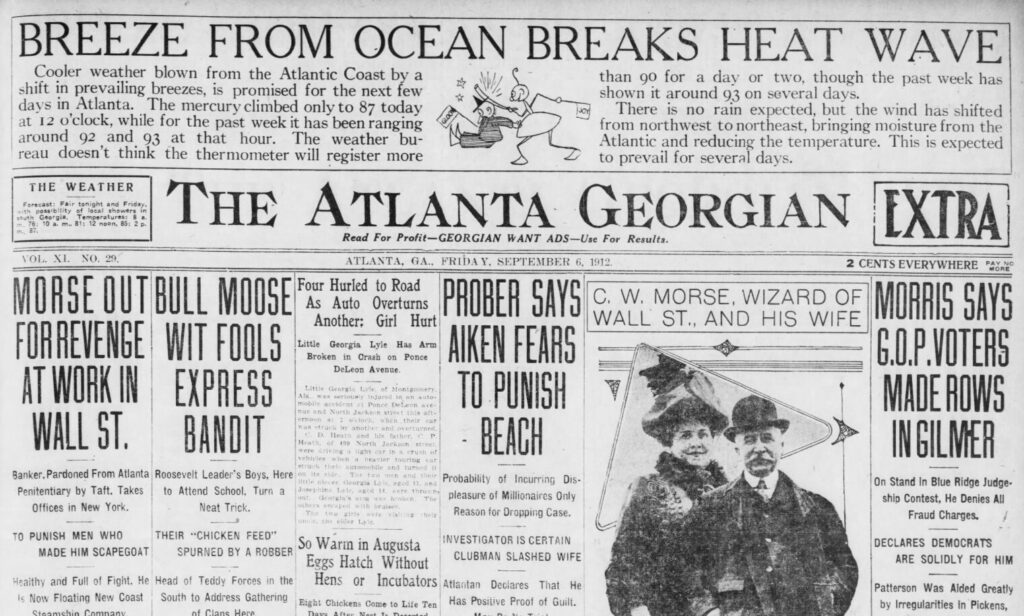
“Sacred Harp Clans Open Rival Conventions: Song Book Causes Feud.” Atlanta Georgian, September 6, 1912, 2.
“Son of Publisher of ‘Sacred Harp’ Raps Rival New Book: Rival Singers’ Feud Bitter.” Atlanta Georgian and News, September 7, 1912, 2.
“Sacred Harp Singers in Rival Conventions: Trouble Between Two Organizations Is Over Which Songbook Is the Orthodox, Recognized Work.” Macon Telegraph, September 8, 1912, 5.
Sacred Harp Clans Open Rival Conventions
SONG BOOK CAUSES FEUD
Rival conventions of sweet singers of the Sacred Harp are in progress in Atlanta today, and will continue through Sunday. It is well that they are two miles apart, or the harmony might be drowned in discord, for the adherents of the warring factions are not fond of each other.
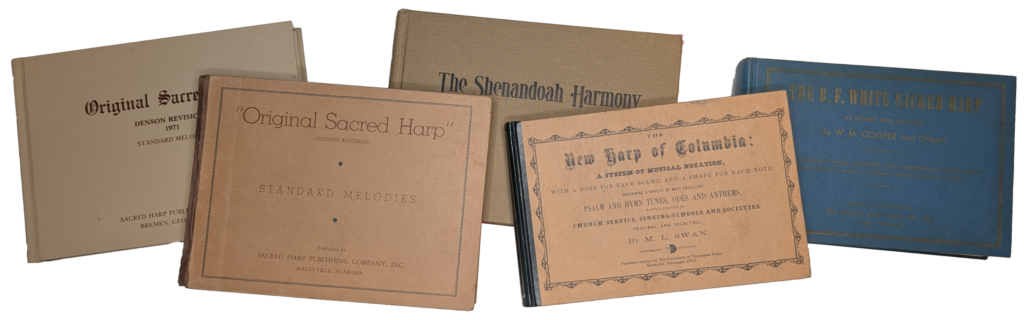
The war of the Sacred Harp is an old story in Georgia. It has broken out in spots at frequent intervals since William Smith invented the “four-shaped note” system of writing music, back in 1844, and B. F. White wrote the far-famed Sacred Harp song book. It took on the proportions of real civil war a year or two ago, when Joe S. James, of Douglasville, led a committee in producing and adopting a new song book in competition with the book published by J. L. White, of Atlanta, and other heirs of the original author. Now each faction contends it is the only authorized, original, dyed-in-the-wool Sacred Harp.
The James followers, known as the United Sacred Harp Musical association, are holding their annual convention at the old Baptist Tabernacle today, with a hundred or so singers, gathered from many states. The International B. F. White Sacred Harp convention is singing at the Missionary Baptist church, on Woodward avenue, with nearly as large a throng. Each has its own song book, and each abjures the other. In fact, the song book and the profits resulting from its sale is said to be the underlying reason for the rivalry between the White and James armies.
The Sacred Harp singers, including all factions, have their own peculiar style of writing music and of singing it. They retain the four parts, but instead of soprano, the high female voice is known as treble and pronounced “tribble.” The notes are only four in number, are indicated by peculiar shapes as well as by their position on the staff, and are called “Mi, Fa, So” and La.” When a hymn is announced, the congregation first sings the notes, calling them by name, and after a stanza of this the words are sung. The Sacred Harpists have no objection to instrumental music, and an organ is sometimes used, though musicians trained in the more accepted school of music find difficulty in playing from the Sacred Harp hymnals.
There was music resounding from both churches today when the rival conventions were under way. The strains of “Ninety-Fifth,” “Liverpool” and “Talbotton,” sung by lusty voices, could be heard a block away. There was an occasional prayer, but no preaching. For the Sacred Harpists came to sing, eat a basket dinner, and then sing again. They will continue for three days, and before they end their meetings will have gone clear through the rival song books and back again.
Son of Publisher of “Sacred Harp” Raps Rival New Book
RIVAL SINGERS’ FEUD BITTER
Clans of Unique Organization Differ Only in Hymnals Used. Notes “Shaped.”
Sticking loyally to their chosen hymn books and their favorite leaders, the rival conventions of the Sacred Harp Singers continued their separate meetings today, though the singers in the two churches numbered hardly more than enough for one big chorus. But the Internationals, in the Woodward Avenue church, and the Uniteds, at the old Baptist Tabernacle, made up in vigor and enthusiasm whatever may have been lacking in volume, and everybody was happy.
From the Tabernacle windows floated the strains of “Sweet Rivers” today, with the deep bassos booming along in a perfect rumble of sound and high-pitched “tribbles” on the women’s side ringing clear above the rest. From the Missionary Baptist, out Woodward avenue, the favorite old “Pleasant Hill,” dating from the Sacred Harp book of 1844, rang out from half a hundred well trained voices. The names have an odd sound to modern ears, for they are the names of the tunes and not of what a theatrical man would call the “lyrics.”
But though both congregations sang from the queer old “shaped notes” and adhered to practically the same rules of harmony, the two bodies differed on the song books used, the Tabernacle folk using the new United Sacred Harp melodies, while the Internationals at the Missionary church stuck to the blue-backed song book created by B. F. White in 1844 and bearing his name as publisher. J. L. White, of Atlanta, himself gray-haired, was bitter in his denunciation of the rival faction at the Tabernacle.
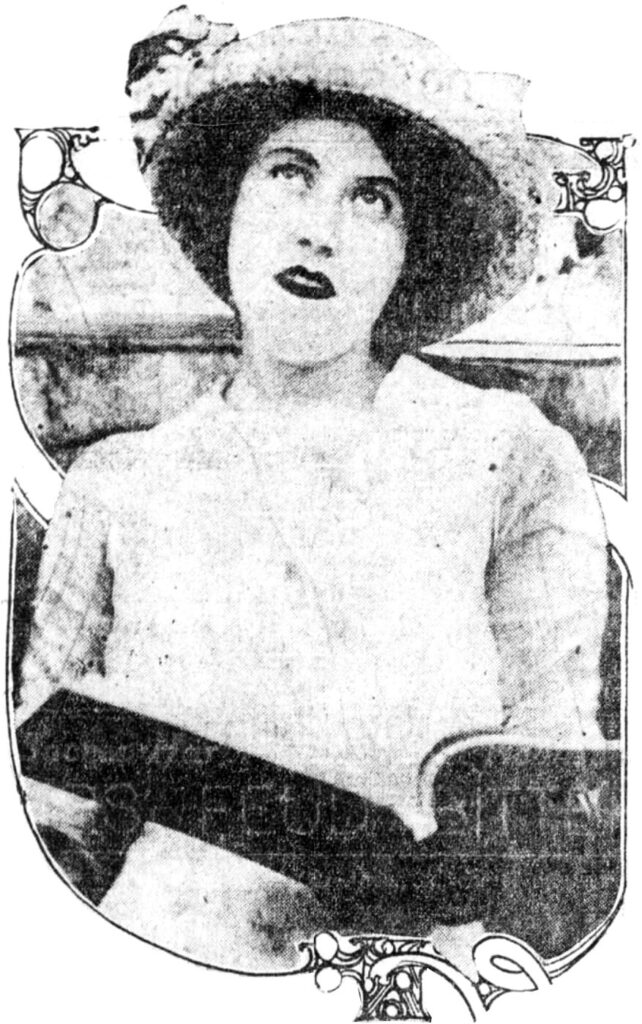
To Stick to Sacred Harp.
“My father made the Sacred Harp,” he said. “It has been revised some since then, but it is practically the same book. The White family has kept it up. It is the property of the White heirs, myself and my four widowed sisters, one 77 years old.
“That crowd led by Joe S. James split off from us a year or so ago. We appointed a committee to revise the book and he led his crowd off and published a brand new book which he controls. We didn’t adopt it. You might as well ask us to change our religion. We couldn’t do it and keep faith with ourselves. We shall stick to the old Sacred Harp.”
“That’s right, Brother White,” suggested a tottering old man with the iron cross of the Confederacy on his coat.
He was a veteran from the Soldiers’ home, given a day’s holiday, and he bore under his arm a dog-eared copy of the song book he had loved for a generation. “If I was you I’d get out an injunction agin them fellers.”
At the Tabernacle, President James, who leads the United Sacred Harp association, was equally as firm in the assertion that his was the real Sacred Harp, authorized and correct. He said his convention was made up of delegates from Sacred Harp societies all over the South, and many had come from a long way off to attend the meeting. And in both conventions there was an atmosphere of fervid determination, or uncompromising intolerance, which might have had its foundation in a vital question of theology rather than in a collection of sacred songs.
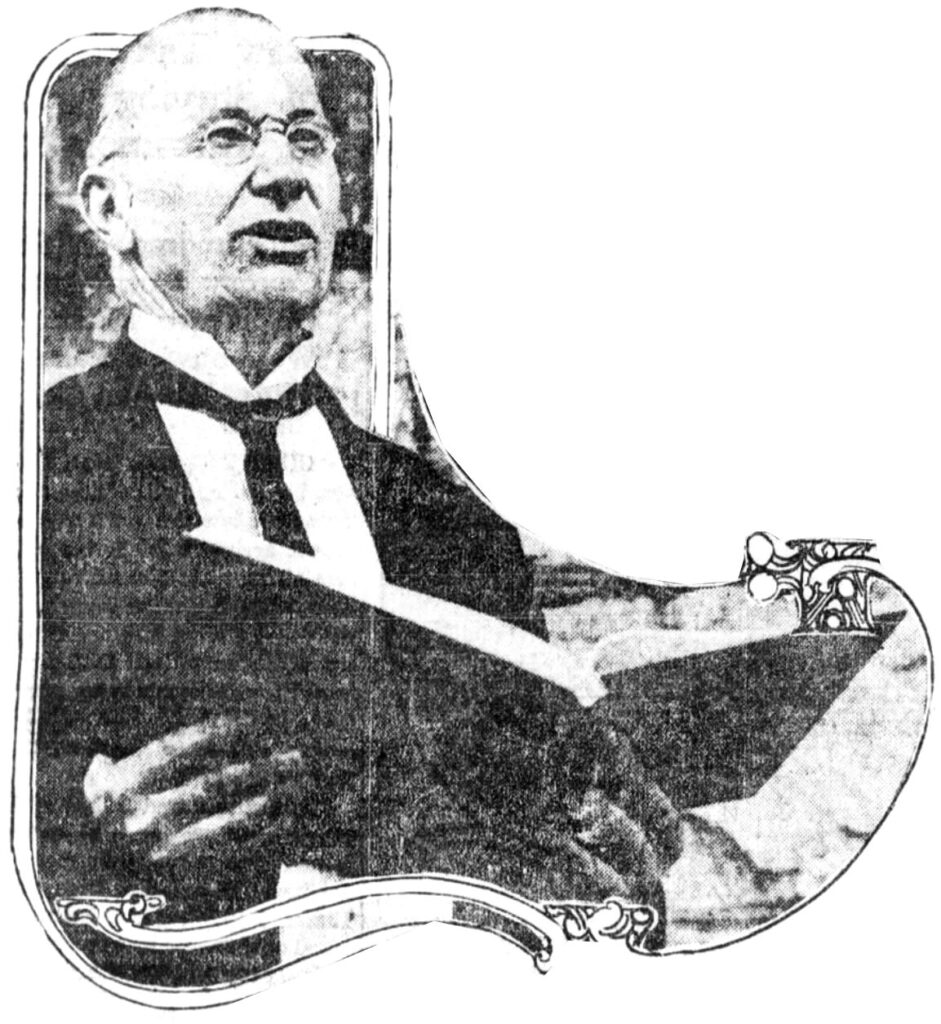
Singing Marvelously Musical.
But whatever their differences, the singing in both conventions was marvelously musical. There was inspiration in the old hymns as sung by these enthusiasts. First the leader announced the hymn, there was a rustling of pages, and then the singers burst into the music, singing the notes, “Mi, Fa, Sol, La,” and giving no heed to the words. Then the words were sung, with every voice joining lustily and confidently. Then a moment’s rest and the selection of another hymn. The leaders were changed frequently, for every man and woman at these conventions is a trained conductor. The sessions begin early in the morning and continue through afternoon and evening. They will close tomorrow afternoon.
An excerpt from the preface of the newer song book shows the spirit in which the Sacred Harp Singers regard their hymns and discard the melodies so popular in some modern churches:
To a considerable extent the sacred song books of this section, and in many cases church music, is badly tainted with operatic, secular and rag-time strains of music. Such compositions drive away, in place of promoting, religion and religious feeling among the church people and lovers of sacred music and retard the work of the Gospel. The aim in the presentation of this volume is to continue in a simple form a great body of sacred tunes which are as far from secular, operatic, rag-time and jig melodies as it is possible. To this end, the music is in four shaped notes and written on four staffs in dispersed harmony—some call it old harmony. In these compositions there are but few of the twisted rills and frills of the unnatural shaking of the voice which have in the last decade so demoralized church music.
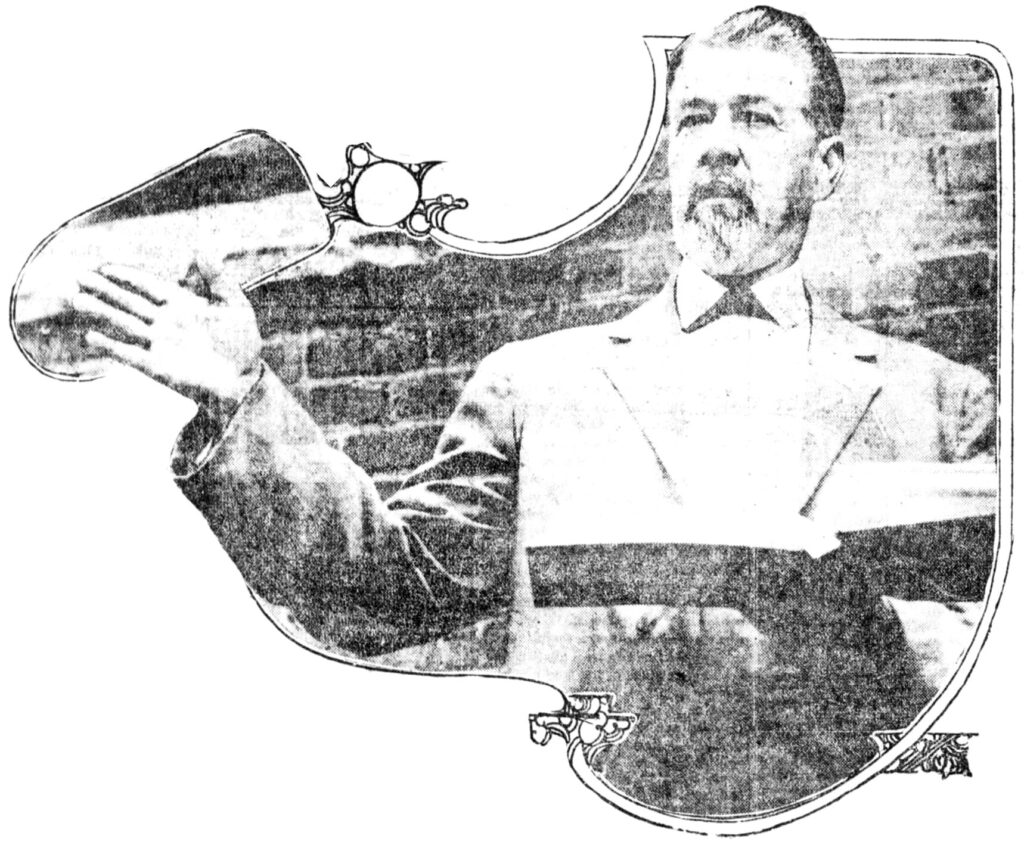
SACRED HARP SINGERS IN RIVAL CONVENTIONS
Trouble Between Two Organizations Is Over Which Songbook Is the Orthodox, Recognized Work.
ATLANTA, Sept. 7.—Georgia’s two factions of Sacred Harp singers are holding revival conventions here, both grimly determined to stand by their guns.
The Internationals are meeting in Woodward avenue Baptist church, while the United are holding forth in the old Baptist Tabernacle. Joe S. James is president of the United Sacred Harp Musical Association, while G. M. Roberts, of Buchanan, is president of the International Sacred Harp convention.
The Internationals are using the “Pleasant Hill” blue-back song book compiled by B. F. White in 1844, and bearing his name as publisher. His son, J. L. White, of Atlanta, himself a gray-haired man now, bitterly denounces the other faction.
“My father made the Sacred Harp,” he declared. “It has been revised some since then, but is practically the same book. The White family has kept it up. It is the property of the White heirs, myself and my four widowed sisters, one 77 years old.
“That crowd led by Joe S. James split off from us a year or so ago. We appointed a committee to revise the book and he led his crowd off and published a brand new book which he controls. We didn’t adopt it. You might as well ask us to change our religion. We couldn’t do it, and keep faith with ourselves. We shall stick to the old Sacred Harp.”
Both factions, however, bitterly oppose any of the modern music with ragtime airs or operatic twists. It is the old-time, “mi, fa, sol, la,” and they sing it like they meant it, too. The factions are split only on the books used.
Leave a Reply